

19-month-old female presents to the ED for evaluation of shortness of breath and wheezing, seen in walk in clinic just prior to arrival and noted to be 87% on room air. She has been eating and drinking slightly less but has had adequate urine output and has had no noted fevers at home. In arrival …
Category: Fundamentals of Emergency Medicine

Levothyroxine; a clinical discussion
Levothyroxine (also known as synthroid) is a synthetic T4 analog commonly used in the treatment of primary, secondary, and tertiary hypothyroidism, and a medication that is often encountered in the Emergency Department. As an NTI (narrow therapeutic index) medication, levothyroxine can have clinically serious side effects if sub- or supratherapeutic doses are taken by the …
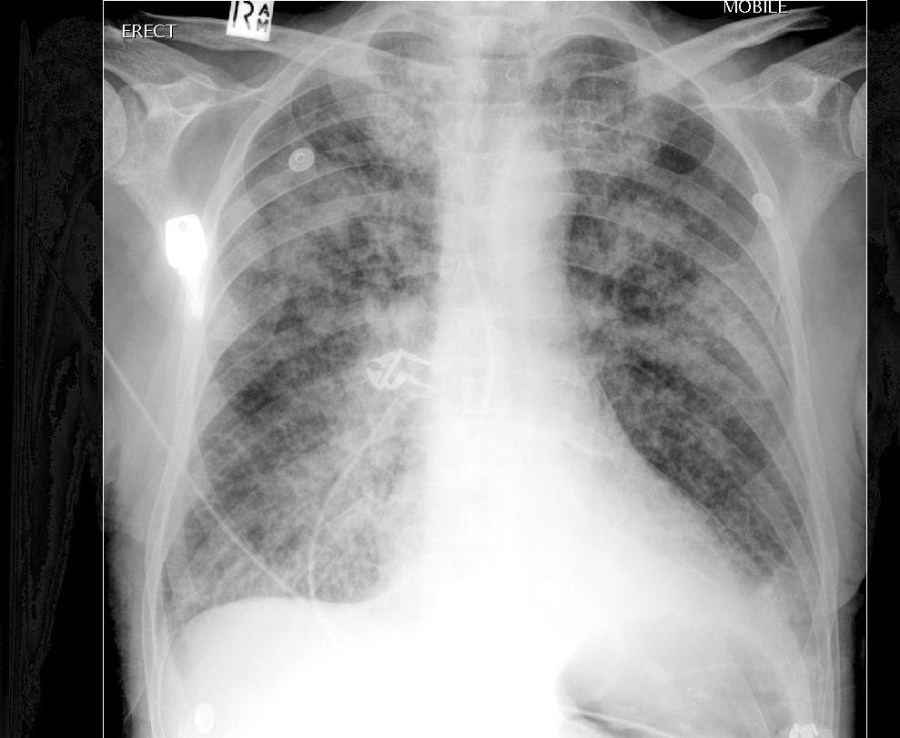
Sympathetic Crashing Acute Pulmonary Edema (SCAPE)
Introduction: As medicine is ever changing, new diseases and symptomatology are being classified differently according to the etiology, presentation, clinical findings, and treatments of subsets of disease pathology. There have been various names throughout the continued advancement of medicine for acute pulmonary edema, but there have also been various clinical findings and differences in treatments …
Continue reading Sympathetic Crashing Acute Pulmonary Edema (SCAPE)

POCUS Peritonsillar Abscess: A literature Review
Title: Evidence-Based Medicine Improves the Emergent Management of Peritonsillar Abscesses Using Point-of-Care Ultrasound. J Emerg Med. 2020 Nov;59(5):693-698. doi: 10.1016/j.jemermed.2020.06.030. Epub 2020 Aug 19. What is already known about this topic?Ultrasound is an accepted modality for detecting peritonsillar abscess (PTA). There are two described approaches transcutaneous with linear transducer and intraoral with an endocavitary probe …
Continue reading POCUS Peritonsillar Abscess: A literature Review

Approach to Nail Trauma
Intro: Distal digital trauma is common and often associated with cosmetic and functional disturbances.Underlying lacerations are often masked by gross deformities of the nail and hematomas.Crush and blunt force injuries are usually the mechanisms involved with nail deformities and underlying nailbed injuries.Treatment can often necessitate nail removal based on clinical judgement and suspicion of underlying …

Eye Hate Puns but Eye Love Board Review.
38 year old female presents to the Emergency Department with reports of left eye pain, discomfort and haziness to her vision. Like the excellent physician that you are, you take a look at her eye. Is the eye red with a weird line on the front? Or does the patient have injected conjunctiva, a ciliary …
Midlines in the Emergency Department; a literature review
Title: The Utility of Midline Intravenous Catheters in Critically Ill Emergency Department Patients. Ann Emerg Med. 2019 Dec 24. pii: S0196-0644(19)31236-3. doi: 10.1016/j.annemergmed.2019.09.018. What is already known about this topic?Previous studies have shown midline catheters inserted in upper arm veins have lower complication rates compared to central lines, and high rates of successful placement in …
Continue reading Midlines in the Emergency Department; a literature review

How to approach medical literature
Whether for Journal Club, or while on the road of lifelong learning, being able to read journal articles is a core skill physicians must master. While it is tempting to merely read guidelines, summaries, or others’ analyses of articles, this will not help you become the best possible physician you can be. Choosing and evaluating …
Subtle hints and STEMI Equivalents
As ED doctors, we’re often handed EKGs every few minutes. Our minds initially will always go to ST elevations and possible myocardial infarctions. With this in mind however, what are the other, lesser seen variants that are equally as dangerous and also warrant immediate catheterization? Hyper-acute T waves Before starting to discuss STEMI equivalents, let’s …
Multisystem Inflammatory Syndrome in Children (MIS-C)
Introduction Throughout the worldwide pandemic of COVID, the general understanding became that pediatric patients were not only less susceptible to the virus but also to the clinical symptoms that accompany it. Albeit rare, Multisystem Inflammatory Syndrome in Children (MIS-C) is a relatively new differential diagnosis that does not necessarily need positive COVID testing and in …
Continue reading Multisystem Inflammatory Syndrome in Children (MIS-C)
 AOMC FOAMed
You must be logged in to post a comment.