
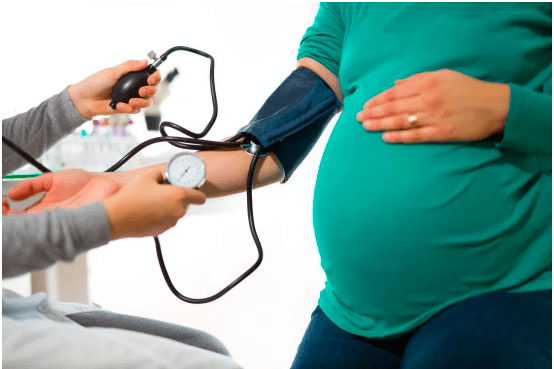

31 year old female presents to the emergency department at 34 weeks pregnant with complaints of a headache. Upon examination the patient also notes she’s having blurred vision and is found to have a blood pressure of 150/90.
The first differential on every emergency physician’s mind should be pre-eclampsia, but with this in mind, what is pre-eclampsia? Sure an elevation of blood pressure in a pregnant woman with fear of progression to seizure/eclampsia, but what is the actual pathophysiology?
Pre-Eclampsia (140/90)
This is defined as a multisystem progressive disorder diagnosed by a new onset of hypertension with end organ dysfunction often seen in 20 weeks gestation to 6 weeks postpartum. In fact, 90% of pre-eclampsia cases occur at 34 to >42 weeks with about 10% prior to 34 weeks. An important concept to emphasize is that unlike prior teachings, proteinuria has a poor correlation to outcome and is not necessary for diagnosis (ACOG 2013).
Of note, an onset of <20 weeks for preeclampsia is possible however generally associated with complete/partial molar pregnancy or antiphospholipid syndrome. Delayed onset postpartum preeclampsia is defined as pre-eclampsia >2 days but less than 6 weeks postpartum.
Gestational Hypertension
This is the most common cause of hypertension in pregnant women and is defined as hypertension without proteinuria or signs of end organ dysfunction. Diagnosis is made by recording a blood pressure of >140/>90 on two occasions at least four hours apart.10-25% of women with gestational hypertension develop preeclampsia.
Clinical Presentation
Eclampsia is rare without hypertension (>140/>90), and a small portion will have HELLP (Hemolysis, elevated liver enzymes, low platelets) without hypertension. Patients with end organ damage will have one of the following signs/symptoms and are classified as having severe features
Headache/Altered Mental Status
Often seen with pre-eclampsia, however the pathophysiology is not well understood.
Vision Changes
Secondary to retinal arterioral spasm, impaired cerebrovascular autoregulation/cerebral edema. This is often clinically seen as blurred vision, flashing lights and scotomata.
Oliguria
<500 ml/24 hours, will have vasospasm and increased sodium/water retention
Abdominal Pain
Patients may have retrosternal/epigastric pain with severe end of the disease spectrum secondary to live swelling and stretching of Glisson’s capsule.
Pulmonary edema
Increased capillary leak with sodium retention will cause facial edema, weight gain of >5 lb/week
Abruptio Placentae
Seen in 3% of patients with severe symptoms.
HELLP Syndrome
This is a subtype of preeclampsia with severe features. In HELLP syndrome, hemolysis, elevated liver enzymes and thrombocytopenia are the clinical features rather than the hypertension/kidney injury/CNS symptoms.
Clinical Work up
Pre-eclampsia work up is centered around identifying end organ damage and should begin with a CBC, liver chemistry (AST/ALT), creatinine level, and urinalysis.
Proteinuria
Gradual process throughout pregnancy and will be seen later in the disease process. This is secondary to podocytes being excreted in the urine with damage to glomerular filtration barrier leading to protein excretion. Can be defined as 0.3 g in 24 hour period, random urine of >0.3 mg protein/mg creatinine or >2+ protein on paper strip.
Elevated creatinine
In pregnancy, creatinine will decrease due to GFR increasing. However in the event of increased creatinine, especially >1.1 is an indication of severe disease.
AST/ALT elevation
Transaminase levels are twice upper limit and are due to increase blood flow to liver along with fat deposition.
Thrombocytopenia
This is the most common coagulation abnormality in pre-eclampsia. Seen in 20% of pre-eclamptic patients, this is due to activation of platelet/fibrin thrombi and endothelial damage. As a result, schistocytes/helmet cells lead to hemolysis and elevation of indirect bilirubin.
Risk Factors
A previous diagnosis of pre-eclampsia increases risk of pre-eclampsia by 8 times. Risk factors also include pre-existing hypertension, pregestational diabetes, nulliparity, chronic kidney disease, genetic predisposition or autoimmune disease.
Interestingly enough, women that become pregnant with men that have had a spouse of pre-eclampsia will have an elevated risk of disease.
Pathophysiology

Although not well understood, it appears preeclampsia is secondary to both maternal and fetal factors. The main premise is the placenta has a shallow implantation with failure in the remodeling of spiral arteries. The uteroplacental blood exchange becomes inadequate leading to oxidative stress. This stress will alter angiogenesis leading to the placenta secreting antiangiogenic factors leading to the widespread vascular dysfunction. An example of this can be seen on kidney biopsy in which endothelial cells have been damaged

Management
Delivery. Delivery, delivery delivery.
In women 37 weeks pregnant without severe features (Alarm findings discussed earlier) delivery is recommended. Prior to 37 weeks, delivery is recommended when severe features are present. OB/Gyn should be contacted early in patients with suspicion of pre-eclampsia.
Treatment of hypertension does not prevent progression to eclampsia, however it will reduce end organ damage. With a goal pressure of <140/<90, treatment options include:
- 20 mg IV labetalol with blood pressure checks every 10 minutes
- 5 mg Hydralazine with measurements every 20 minutes
Although mechanism is poorly understood magnesium sulfate reduces risk of progression to eclampsia. 6 g of magnesium sulfate over 15-20 minutes followed by 2 g/hour. Keep in mind the side effects of hypermagnesemia include:
- Loss of deep tendon reflexes at 7-10 mEq/L
- Respiratory depression/paralysis 10-13 mEq/L
- Altered cardiac conduction >15 mEq/L
- Cardiac Arrest >25 mEq/L
Eclampsia
In the event of tonic clonic seizure, patients should be placed in the left lateral decubitus position with airway maintained and supplemental oxygen to prevent hypoxemia. From here, magnesium should be used as an anticonvulsant as described previously with emergency consultation to OB/Gyn.
Take Home Points:
- 90% of pre-eclampsia occurs between 20 weeks and 6 weeks postpartum
- Be aware of all pregnant women’s blood pressure, watching for >140/>90
- Pre-eclampsia presents as HTN and end organ damage
- Treat with magnesium to prevent progression to eclampsia
- Watch for magnesium toxicity, monitoring DTRs, respiratory status and cardiac monitoring
Written by: Hakkam Zaghmout, MD
Peer reviewed and edited by: Stevely Koshy, DO
References:
- Gestational Hypertension and Preeclampsia: ACOG Practice Bulletin Summary, Number 222. Obstet Gynecol 2020; 135:1492.
- Wagner LK. Diagnosis and management of preeclampsia. Am Fam Physician. 2004 Dec 15;70(12):2317-24. PMID: 15617295.
- G.J. Burton, A.W. Woods, E. Jauniaux, J.C.P. Kingdom, Rheological and Physiological Consequences of Conversion of the Maternal Spiral Arteries for Uteroplacental Blood Flow during Human Pregnancy, Placenta, Volume 30, Issue 6, 2009, Pages 473-482
- Alexander JM, Wilson KL. Hypertensive Emergencies of Pregnancy. Obstetrics and Gynecology Clinics of North America. 2013;40(1):89-101. doi:10.1016/j.ogc.2012.11.008.
- Tintinalli’s Emergency Medicine: A Comprehensive Study Guide, 9e, by Judith Tintinalli and J Stapczynski, McGraw-Hill Education, 2020, pp. 684–690.
 AOMC FOAMed